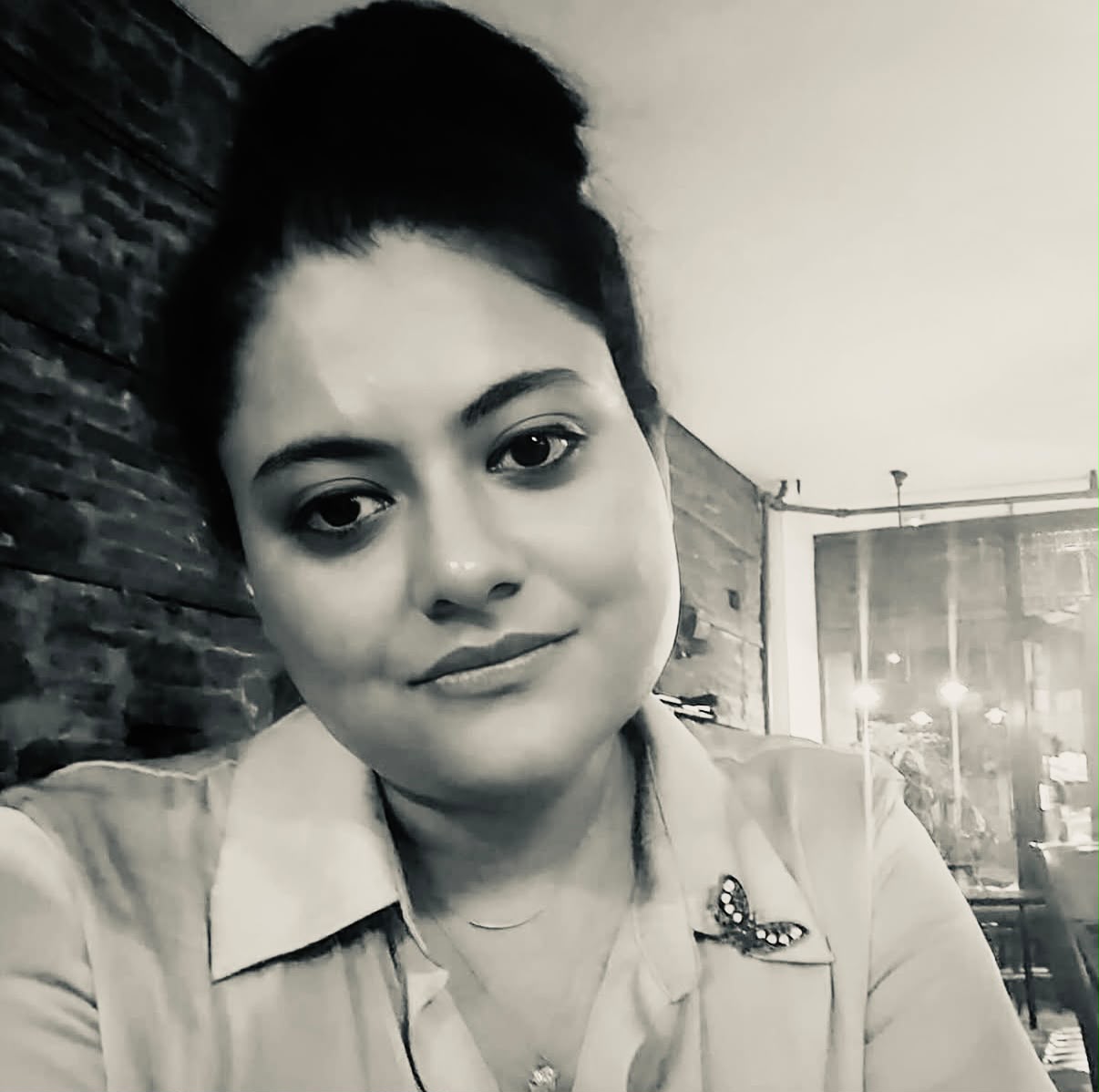
Welcome! My name is Aratrika Ray-Dowling. This portfolio is a window into my creative soul, showcasing fine art projects I have been passionately developing since 2009. I create art in my leisure hours as a mechanism for pure self-expression—giving me a profound sense of freedom when words fall short, and serving as a soothing sanctuary during life's low moments. Sometimes, I feel the need to boldly champion this artistic passion. Society often harbors a rigid stereotype that technical minds cannot be deeply creative. For me, making art is a beautiful refreshment that completely shatters those invisible boxes. The intricate art style I practice today is the result of years of formal training, raw passion, and a specific creative trigger.
Growing up in India, both the education system and my parents strongly encouraged exploring meaningful activities beyond formal schoolwork. My parents exposed me to diverse cultural mediums early on, and art quickly stood out. However, my earliest relationship with drawing was actually born out of academic pressure. In the Indian schooling system, scientific diagrams are crucial; the neater the diagram, the higher the grade. When I was around 5 or 6 years old, these precise life science diagrams deeply intimidated me. While many of my peers had already enrolled in art schools, I was struggling. I distinctly remember staying up all Friday night as a 6-year-old, panicking over a life science assignment that required drawing six domestic animals into an interleaf workbook by Monday. To help me cope, my father taught me a clever trick: draw using faint dots first, then connect them for a clean finish. While it made erasing and correcting easier, I quickly realized it took far too long! Recognizing my anxiety, my parents enrolled me in my first art school, run by Mr. Nihar Chowdhury. His teaching philosophy was anchored in complete creative freedom. He allowed us to draw whatever our hearts desired, correcting our work gently with a permanent smile. Observing my initial skepticism toward rigid drawing rules, he kindly waived the school's yearly drawing test for the younger children. His class became a joyful haven where we could draw without fear, study the work of older students, and absorb new techniques. By age 9, I transitioned to another school run by Mr. Prasanth Mullick. Though I only stayed for a year, my skills improved dramatically. My parents noticed that my fear of drawing had vanished and scientific diagrams were no longer a nightmare. Believing the mission was accomplished, they paused my art classes so I could focus entirely on my core school studies.
My true formal training began in the 7th grade, culminating in a five-year fine arts diploma under the mentorship of Mr. Pranab Mullick. He became a foundational figure who left a lasting impact on my life. While he strictly respected the board regulations, he masterfully left open spaces for us to broaden our individual creativity. The original voice I possess today would not exist without the freedom he taught me to nourish. He always told us: “Observe and follow people from whom you think you can learn. Before making something unique, you must follow established figures and understand their life’s philosophy.” To this day, I live by this advice, constantly seeking out the best attributes of the people around me. I believe that uniqueness is triggered by thousands of daily observations; all we have to do is pay attention.
The specific origin story of my pattern work traces back to my high school years (9th and 10th grade). In South Asian culture, applying intricate henna (mehendi) tattoos to the hands for special occasions is a cherished, decades-old tradition. My friends and I became utterly obsessed with drawing henna-inspired patterns on each other's palms using black gel pens during recess. It became an addictive daily ritual. This obsession prompted me to start carrying a small art journal in my backpack. Fueled by the daily encouragement and appreciation of my classmates, my doodles quickly evolved into complex, structured patterns. In 2009—the exact year I completed my fine arts diploma—I started a dedicated pen art diary to archive these designs. I refused to let my hard-earned skillset gather dust in an attic just because my classes had ended. I wanted more. From 2009 to 2015, I focused entirely on creating intricate, theme-based pattern art that was heavily inspired by, but distinct from, traditional henna. Near the end of my diploma, I nervously showed these diary pages to my mentor, Mr. Pranab Mullick. He looked at them in complete shock and asked, "Are you sure you did this?! Oh my God!" Seeing both profound surprise and genuine validation in his eyes reassured me that my experimental style was something truly special.
Over time, I chose to expand my format. I realized my unique pattern style could be mapped onto broader concepts to convey deep, impactful messages. Since then, I have dedicated myself to conceptual fine art projects while keeping my signature pen-and-ink form intact. Around 2016, a massive global trend boomed across Instagram and Tumblr, celebrating monochromatic pen art using Pigma Micron pens. I was absolutely thrilled to see artists worldwide embracing white-medium pen art as a cultural sensation—and incredibly proud to realize I had been pioneering that exact up-to-date style independently since 2009! Seeking to connect with peers, I joined the online DeviantArt community in 2016. The platform hosted creators of all levels, including world-renowned master palette-knife artist Leonid Afremov. One of the absolute happiest days of my artistic journey was when Afremov took the time to look through my profile and officially "liked" one of my original patterns (PATTERN 15). Immersing myself in that community, exchanging custom "llama badges" as tokens of mutual respect, and sharing work with global creators became one of my single greatest sources of artistic motivation. DeviantArt welcomed artists of every background, proving that art truly speaks a universal language.